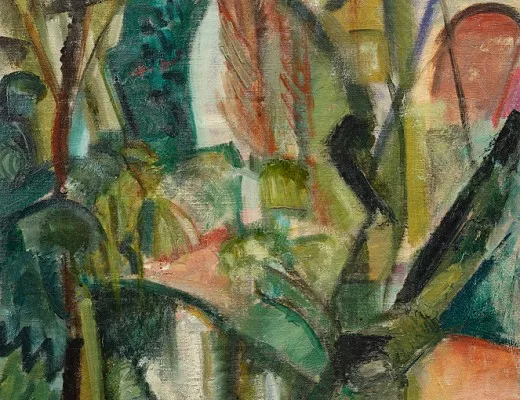
André Favory
1889, Paris – 1937, Paris
France
André Favory was born in 1889 in Paris to a Parisian industrialist father.
Nephew of the satirical draftsman Hermann Paul, he began painting as a self-taught artist by vocation and intermittently, having to maintain a parallel job in the family business.
As early as 1907, without having had any masters, he began exhibiting at the Salon des Indépendants.
Heir to the painting of Paul Cézanne, from 1907 to 1910 he sought his style and experimented with several pictorial languages.
In 1912, he entered the Académie Julian and studied with professors Marcel Baschet and Henri Roger. He became friends with Jean Metzinger, Albert Gleizes, and Roger de La Fresnaye, and there he met his friend André Lhote.
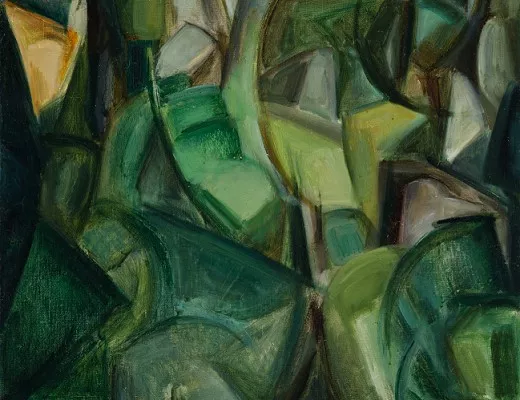
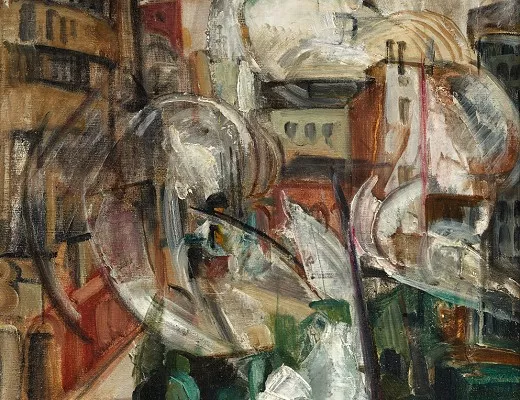
In 1913, André Favory approached the world in a new way and composed cubist works.
In 1914 he was mobilized during the First World War.
Upon his return, after experiencing the horror of war, he turned away from cubism, which he considered too "intellectual."
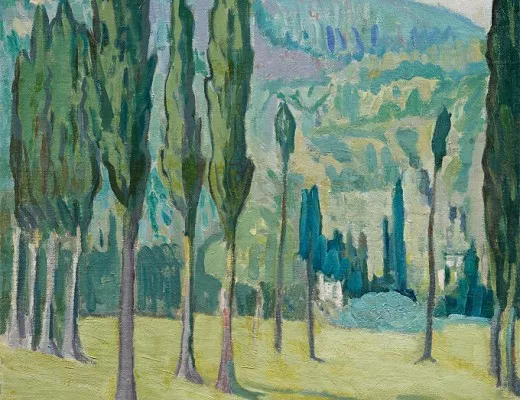
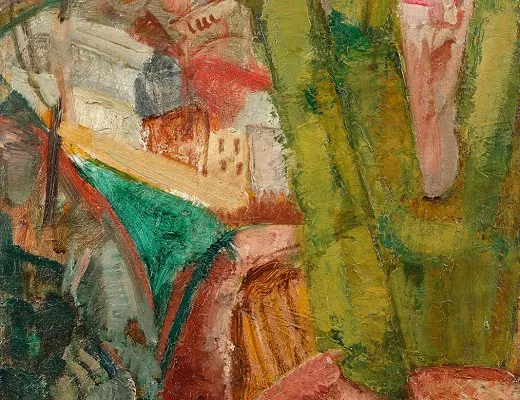
André Favory is known for his landscapes and female nudes. His touch is broad and powerful, the colors used are bright and warm. He exhibited regularly at the Salon d'Automne from 1912 to 1937, at the Salon des Tuileries from 1923 to 1936, and at the Salon des Indépendants from 1920 to 1938.
Numerous solo exhibitions were dedicated to him during his lifetime in France and abroad, notably at Galerie Malpel 1913; Galerie Druet 1920, 1921, 1923, 1924-1926; Galerie Berthe Weill 1923; Galerie Katia Granoff 1926; Godfrey Phillips Gallery London 1929; Galerie Moos 1930; Galerie Charpentier 1936.
His works were presented in group exhibitions in France and abroad during his lifetime, notably at Galerie E. Blot 1915; Marcel Bernheim 1922; Devambez 1922; B. Weill 1922; Bernheim Jeune 1923; Druet 1922-1923; Bellemaison New York 1922; Musée d'Art et d'Histoire, Geneva 1926; Galerie Charpentier 1934.
His works are held in institutions such as the Musée d'Art Moderne de la Ville de Paris, which holds six works dating from the 1920s from state acquisitions or donations: (Le repos du modèle, oil on canvas 1924), (Nu de dos, oil on canvas, 1924), (Nature morte, oil on canvas), (Paysage du midi, oil on canvas 1924), (Autoportrait à la femme blonde, oil on canvas 1924), (Nu dans un paysage, oil on paper before 1922); at the National Gallery of Fine Arts in Sofia (Nu vers 1920), at the Petit Palais in Geneva (Les Baigneuses), as well as at the Museums of Brussels, Grenoble, Le Havre, Moscow, Oslo, Riga, Stockholm, Philadelphia, and Warsaw.
At the same time, André Favory worked as an illustrator, notably for works such as Les poèmes de l'humour triste by Jules Supervielle (1919), and a reissue of L'Education sentimentale by Gustave Flaubert (1924).
Stricken by illness, he prematurely stopped creating in the 1930s and died in 1937.


'%3E%3Cpath d='M0,0 v30 h60 v-30 z' fill='%23012169'/%3E%3Cpath d='M0,0 L60,30 M60,0 L0,30' stroke='%23fff' stroke-width='6'/%3E%3Cpath d='M0,0 L60,30 M60,0 L0,30' clip-path='url(%23t)' stroke='%23C8102E' stroke-width='4'/%3E%3Cpath d='M30,0 v30 M0,15 h60' stroke='%23fff' stroke-width='10'/%3E%3Cpath d='M30,0 v30 M0,15 h60' stroke='%23C8102E' stroke-width='6'/%3E%3C/g%3E%3C/svg%3E)